 Image 1 of 8
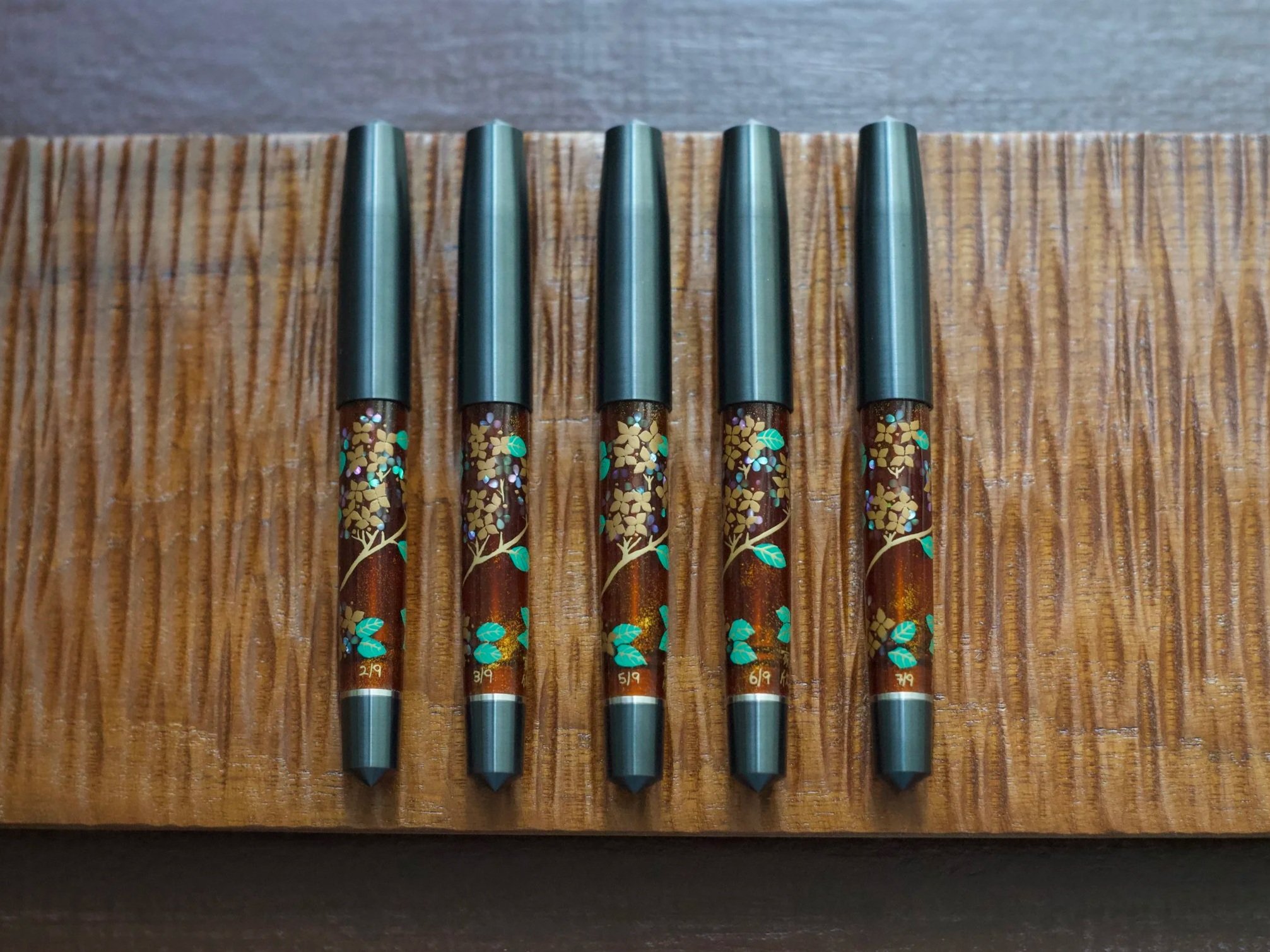 Image 2 of 8
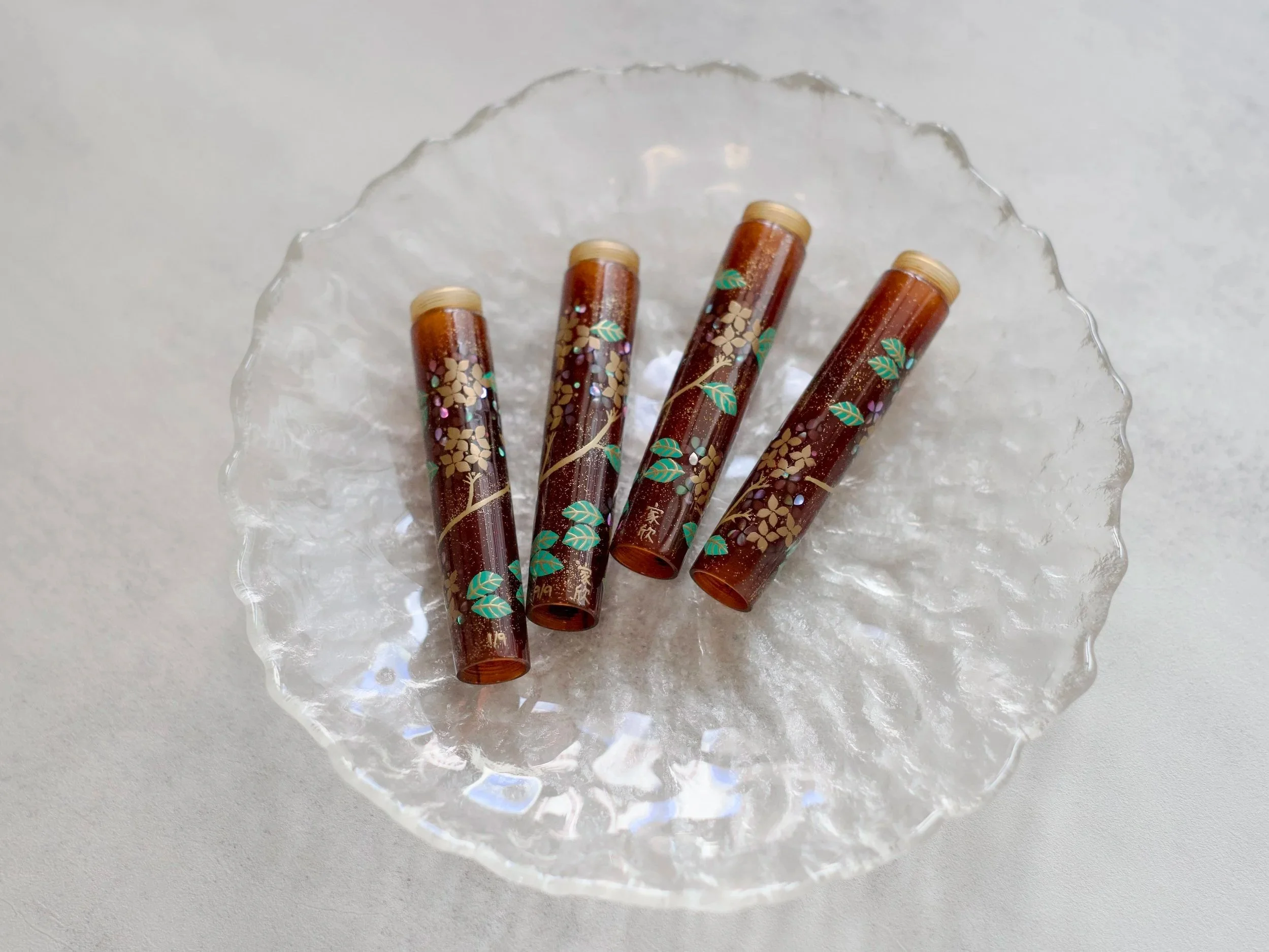 Image 3 of 8
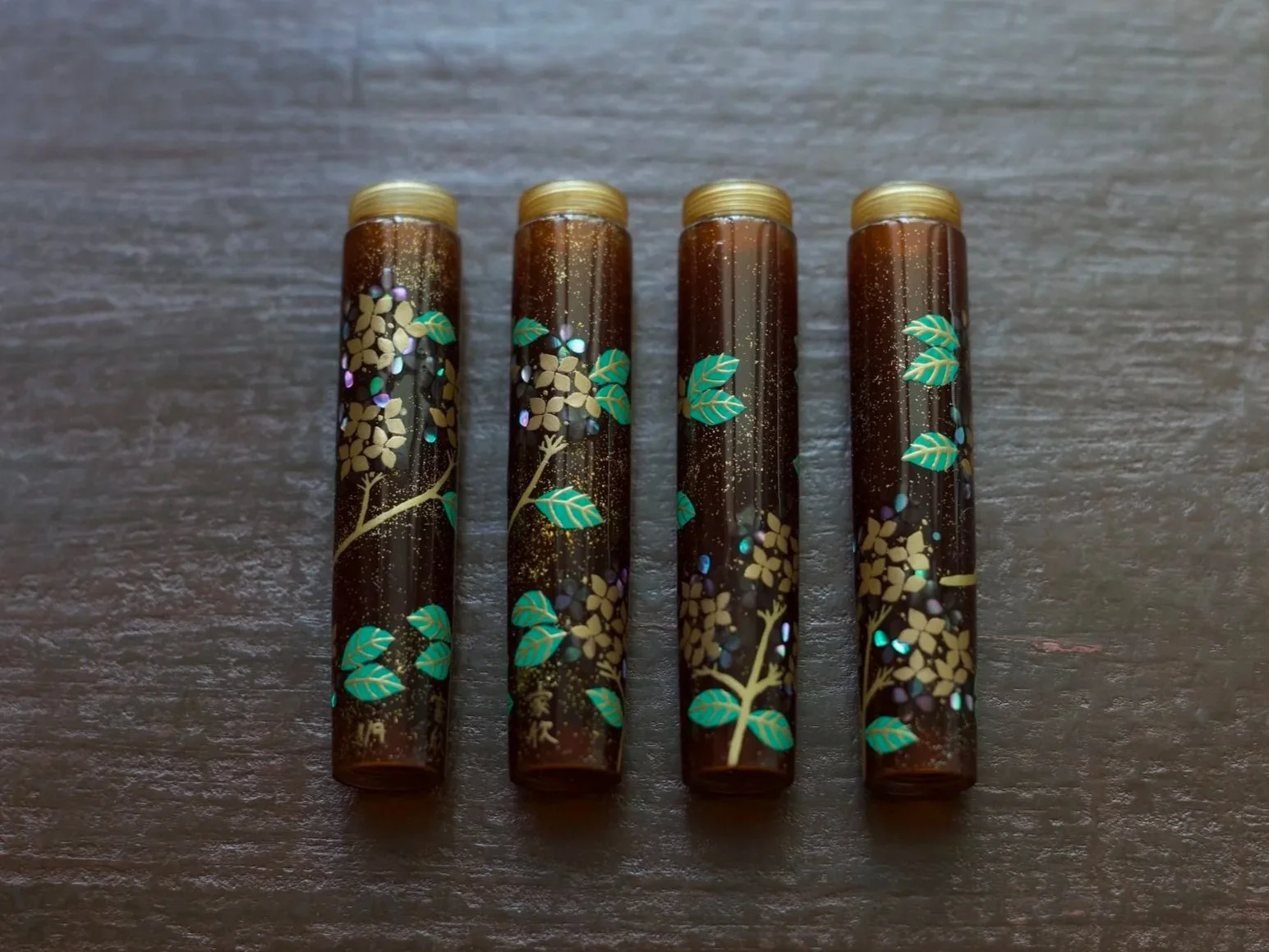 Image 4 of 8
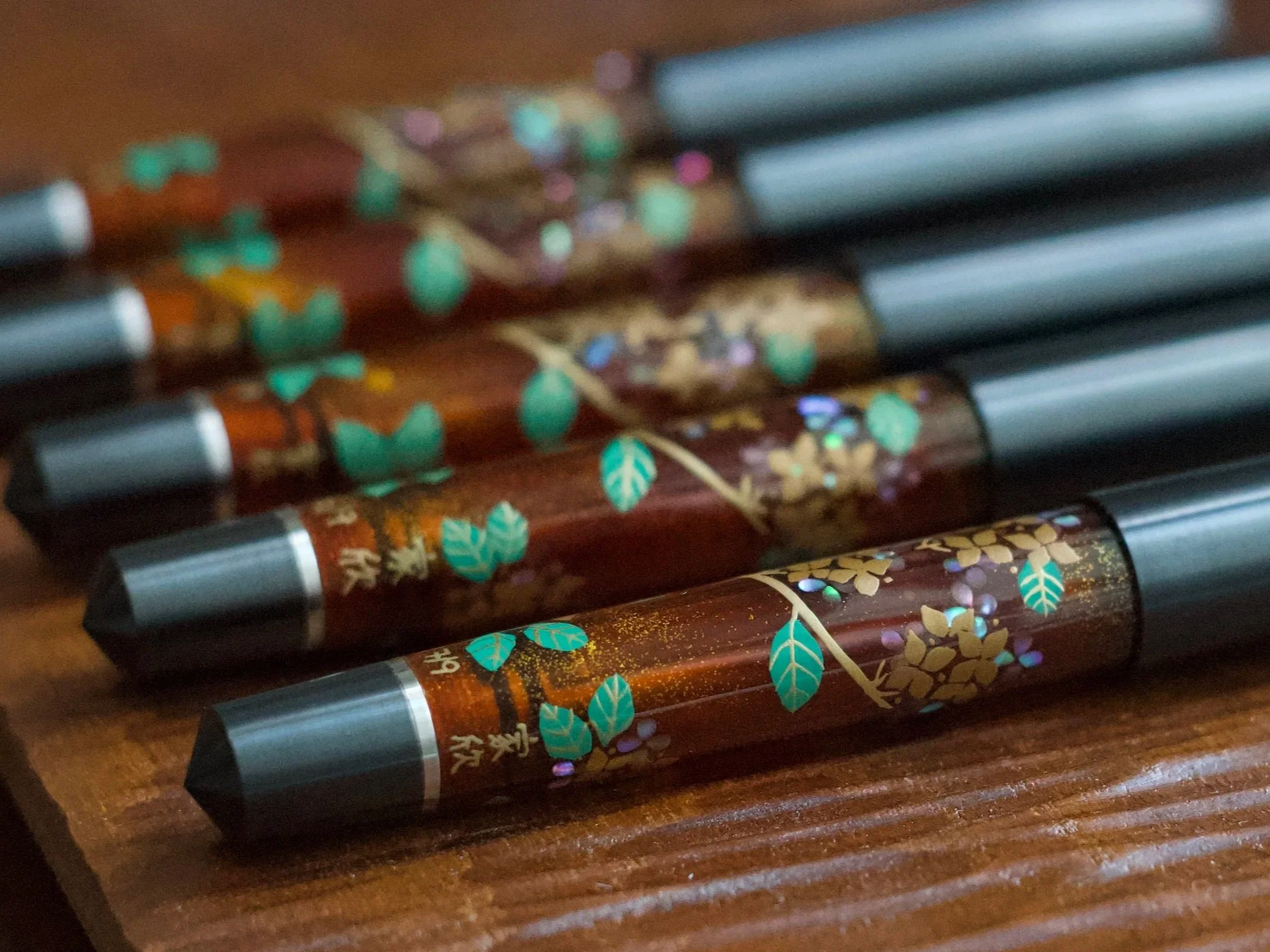 Image 5 of 8
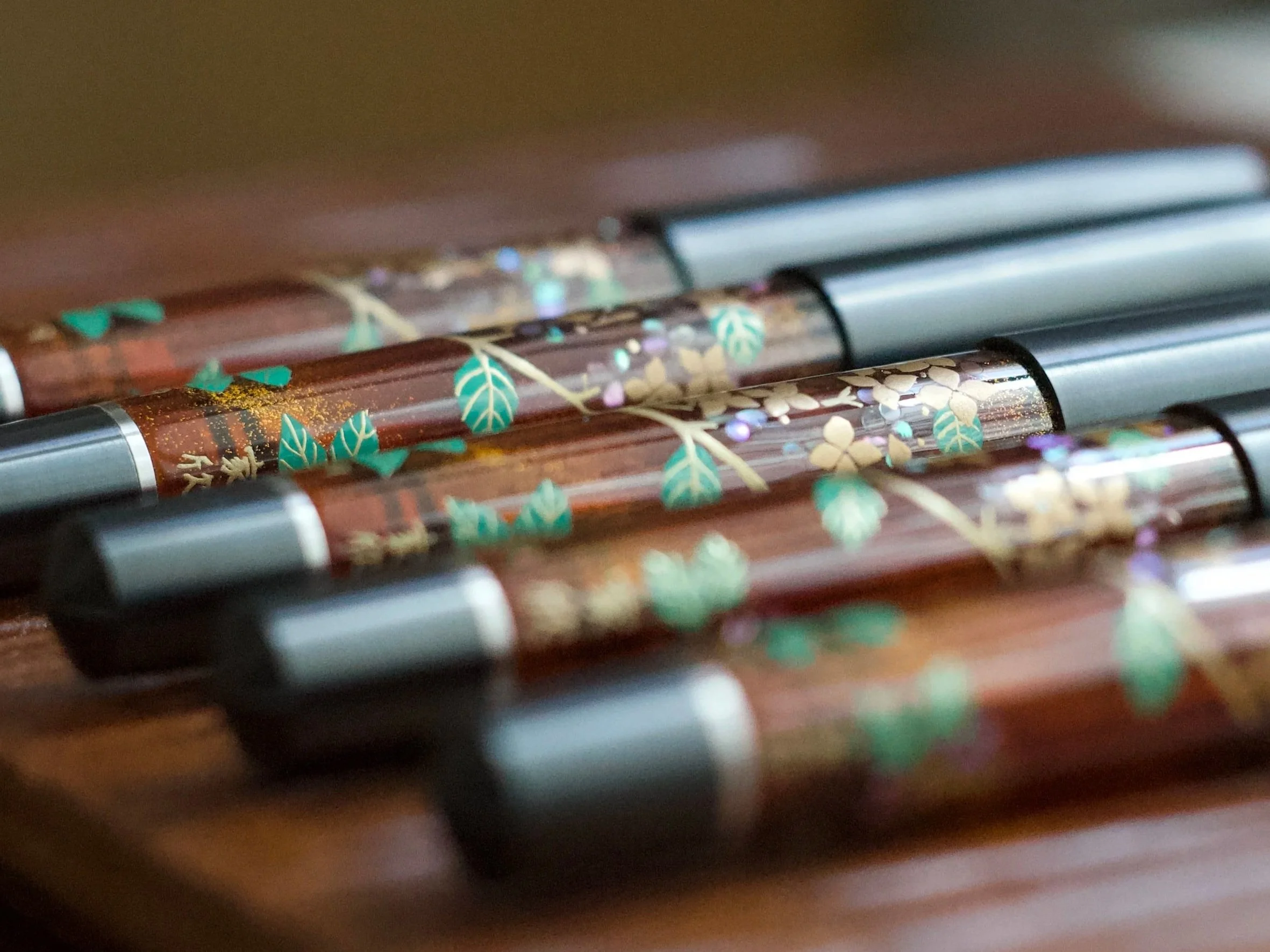 Image 6 of 8
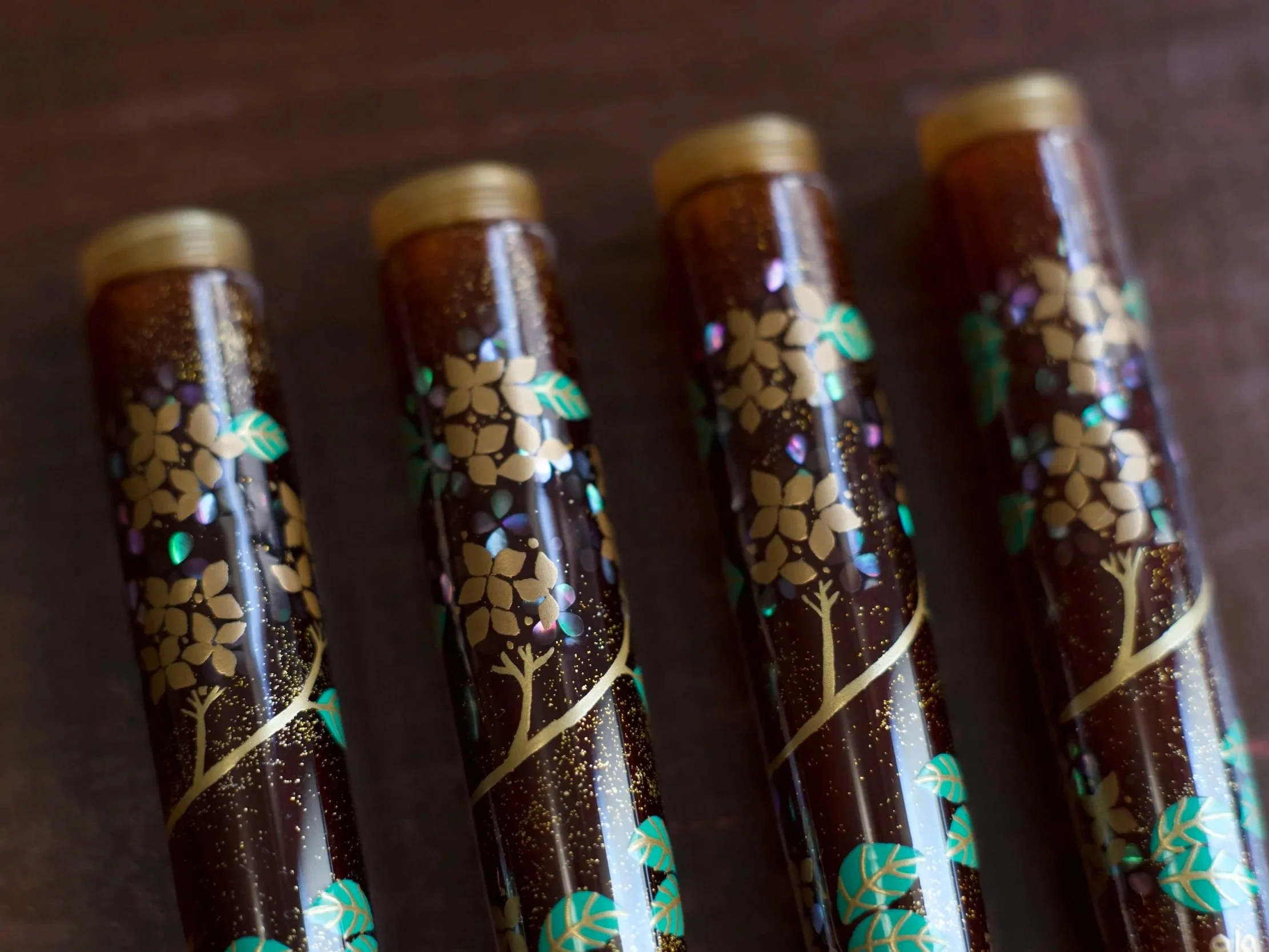 Image 7 of 8
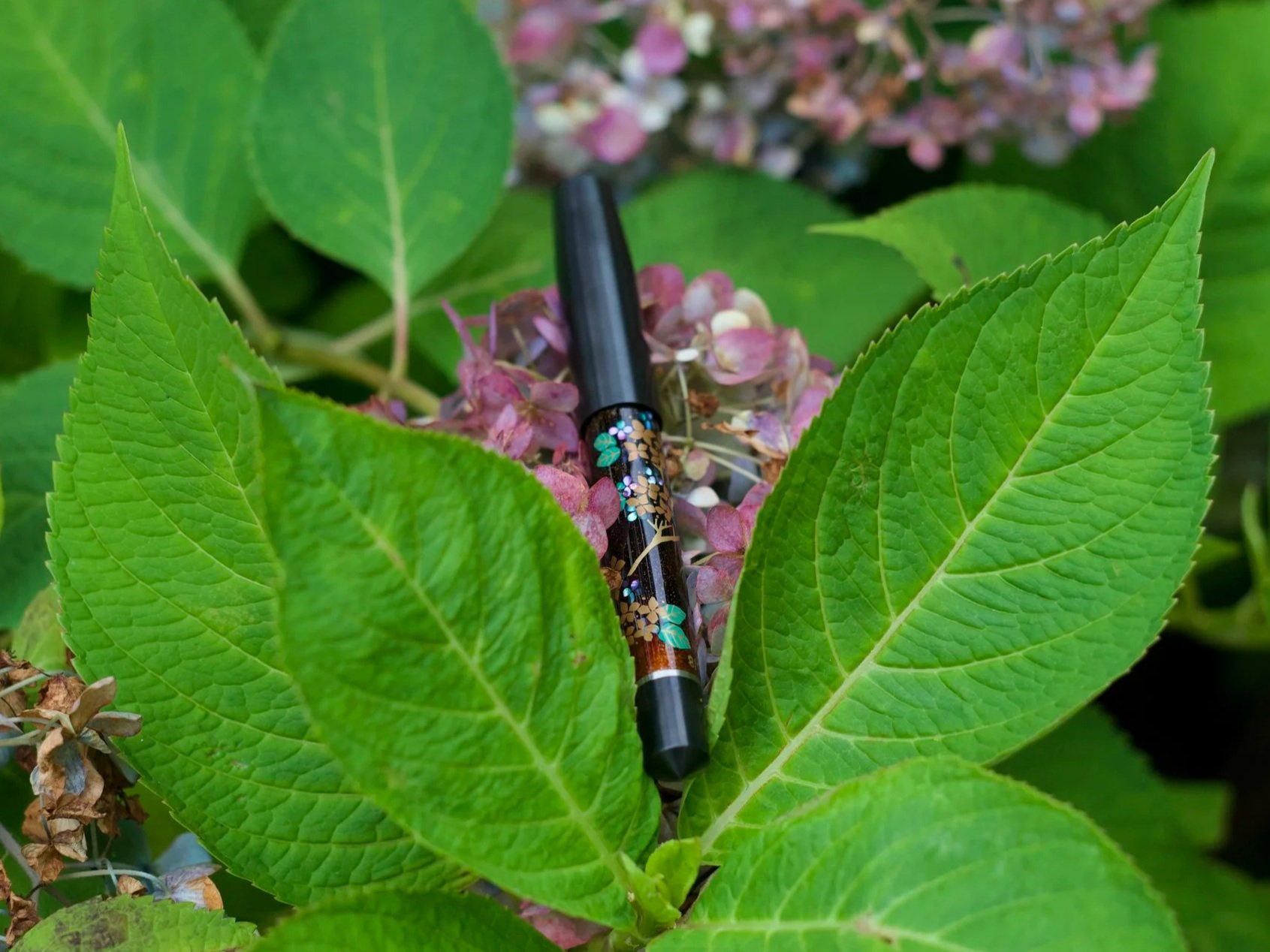 Image 8 of 8
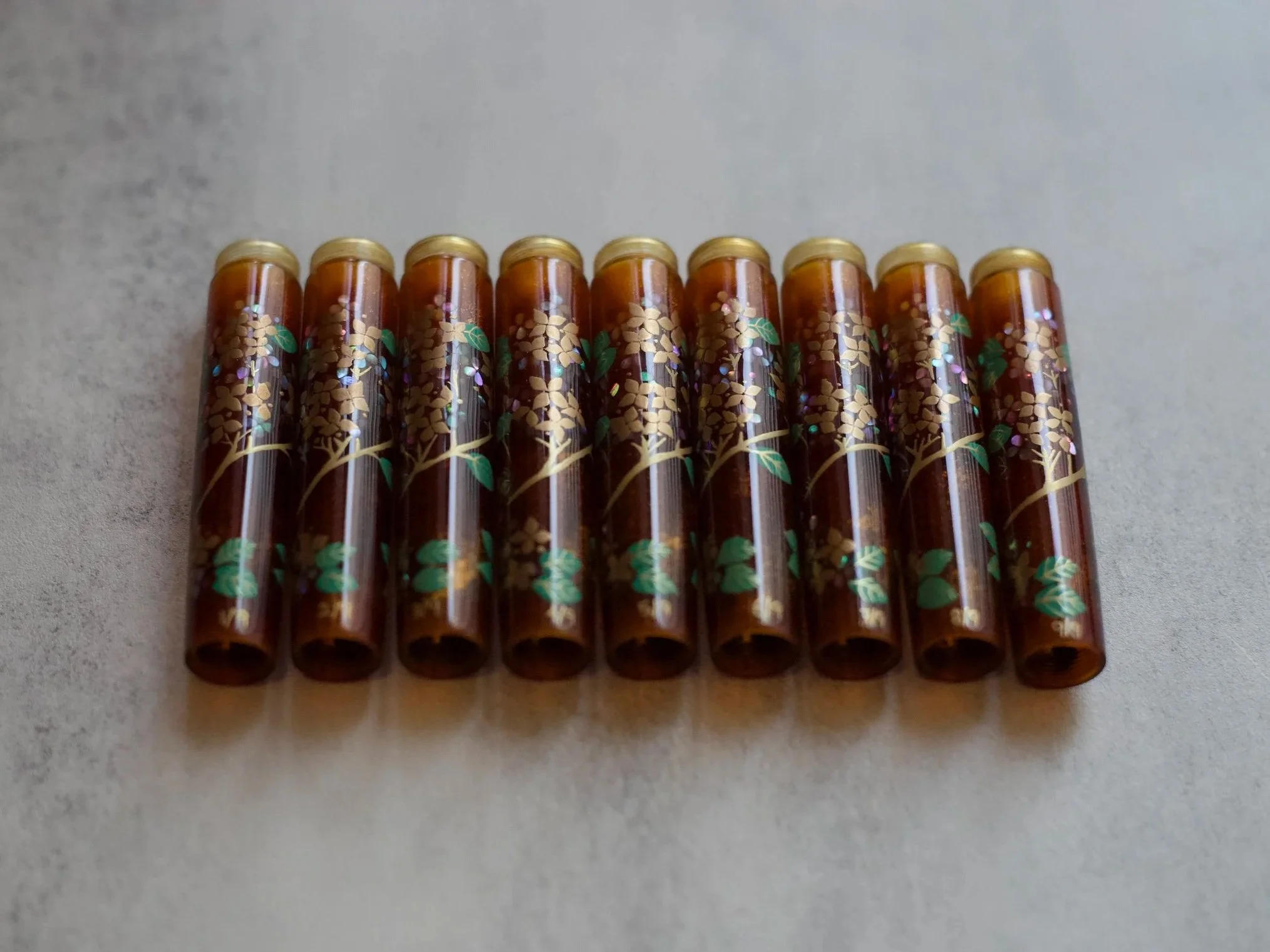
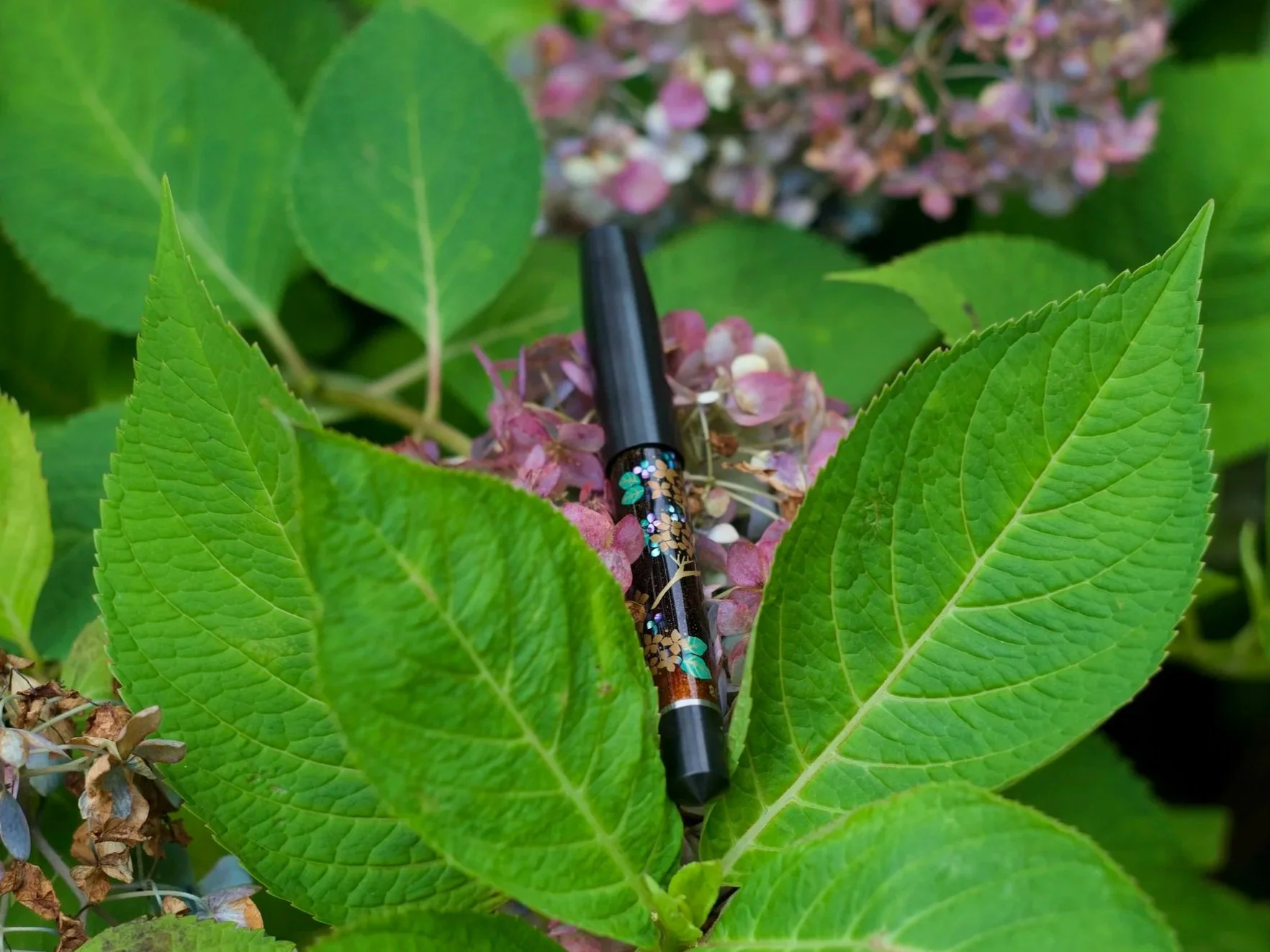
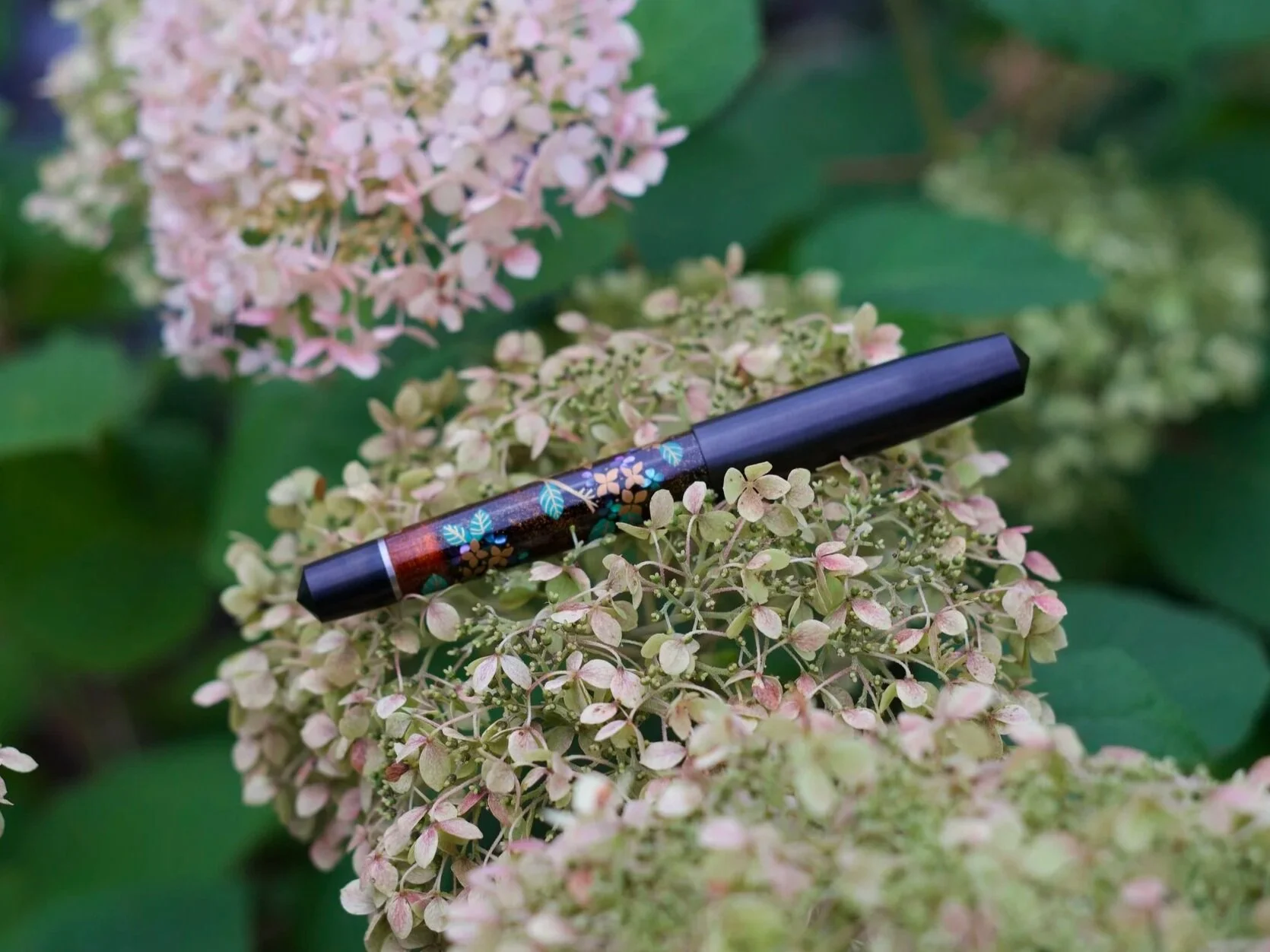
Hydrangeas are known for their color variations from their deep blues to vibrant pinks, which results from the acidic or alkaline conditions of the soil they grow in. Taking inspiration from this, we decided to use the natural iridescent properties of the abalone shell used for raden inlay to reflect the myriad colours that shift depending on the angle of light. This is paired with gold maki-e details to complete the Hydrangea blooms, adding a sense of depth to their characteristic spherical clusters.
-
Capped Weight: 46.6g
Uncapped Weight: 30.8g
Ink Capacity: 3.5ml ~ 4.2ml
Section Diameter: 10.6mm ~ 11.9mm
Pen Barrel Diameter: 12.6mm ~ 14mm -
The Pump Piston filler is a high capacity filling mechanism that is powered by a piston unit activated along a piston rod. The rod attaches to the piston unit via three spokes easily and freely. Once the piston rod is secure in the J-lock on the piston unit, the piston unit can be detached from the piston connector at the back of the pen by turning the piston knob counter-clockwise and be pushed towards the section, which expels the air in the barrel.
For more information visit our page with video instructions here.
-
We recommend the use of dye based fountain pen inks only. Use of pigmented inks or iron gall inks may leave visible residue inside the clear barrel that cannot be removed.
Please place your pens on a pen tray or a pen rest when not in use at a desk. While the materials used in the Kyuseido Kakari and the Kyuseido Kosumi lines are of the highest quality, vertical impact may cause damage to the pen. Repairs are possible but will carry a repair fee.
Please do NOT attempt to self-repair. Always contact your Authorized Retailer first if you are having issues with your Pump Piston Filler.
ABOUT THE DESIGN
The changing seasons play a significant role in Japanese culture and life. As each cycle ends another begins and the natural landscape of Japan dramatically changes throughout the course of the year. The fleeting yet endless cycles of the seasons have been a continual source of inspiration for Japanese arts and literature. This close connection with nature runs deep within Japanese culture and is often celebrated with the many varieties of flowers that bloom throughout the different seasons.
Hydrangeas have been represented in Japanese art as far back as the Nara period where it was referenced in the Man'yōshū, which is the oldest Japanese collection of waka poetry. While this genus of flowers are native across Asia and the Americas, it is believed that Japan was one of the first nations to cultivate this plant, with now 70-80 variants that are grown in the country. The Hydrangea was then brought to Europe in the 1700’s where it quickly gained popularity across the region.