

The Sankakusen Grind: Characters of the Brush in Fountain Pen Writing
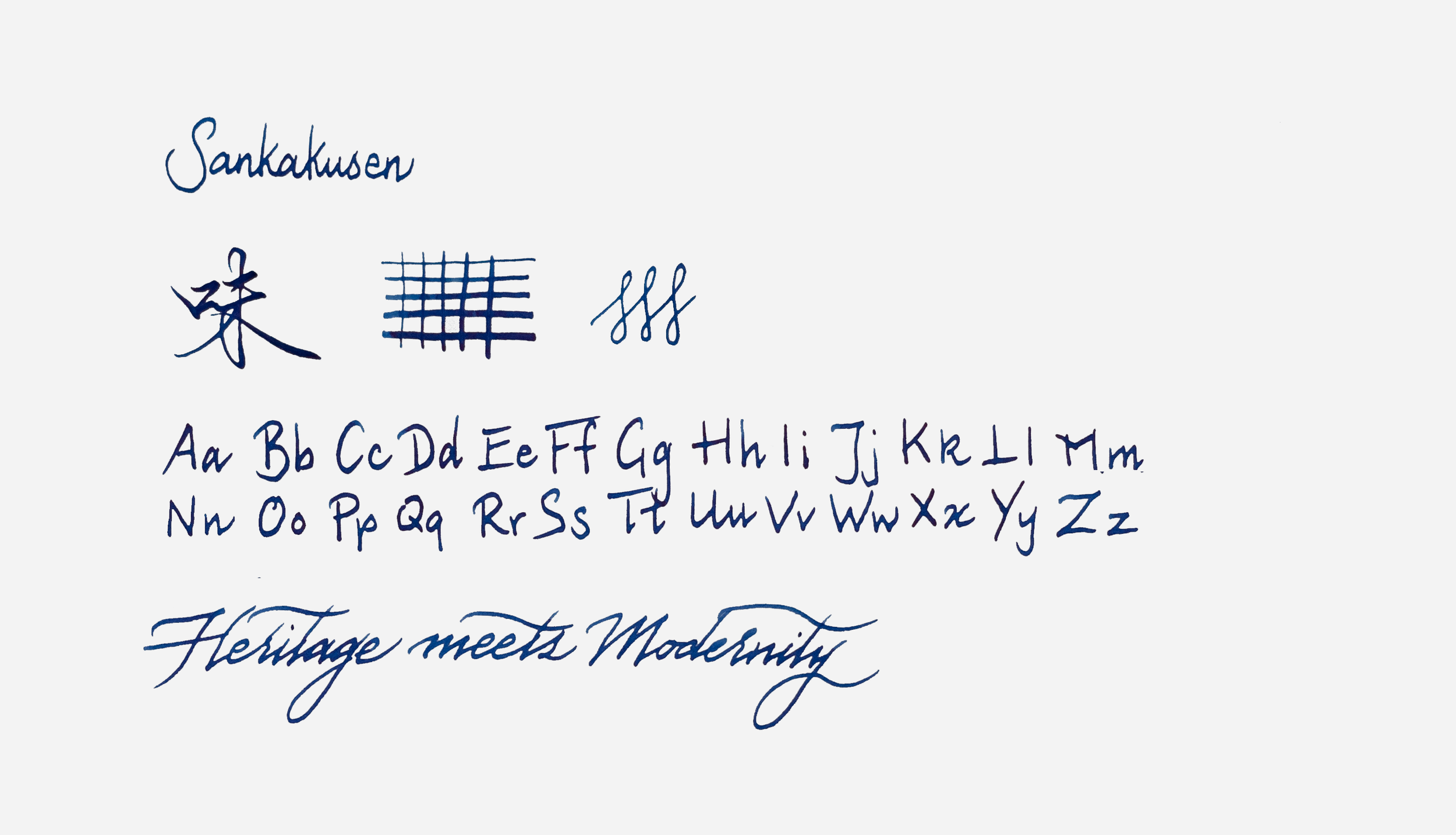
Writing sample of our Sankakusen nib grind
What Is The Sankakusen Grind?
Handwriting as an artform links us with our heritage while simultaneously connecting us to the future. However, although we have a plethora of choices when it comes to the outward appearance of the pen, the writing point: the tipping of the nib, is still often offered only in rounded standard sizes of Fine, Medium, and Broad. Yet, the rounded single width nib is a recent development if we look at the history of writing instruments.
The literati of human history have traditionally used writing implements with variable line widths in order to create the beautiful written treasures that they have left behind for us. While the single width nib was developed to promote widespread literacy and ease of writing, a specialty nib should be considered for the curious writer who wants to take their handwriting to the next level. The Sankakusen is a nib that uses its unique shape to form lines and strokes on paper that cannot otherwise be expressed with the standard single width nib.
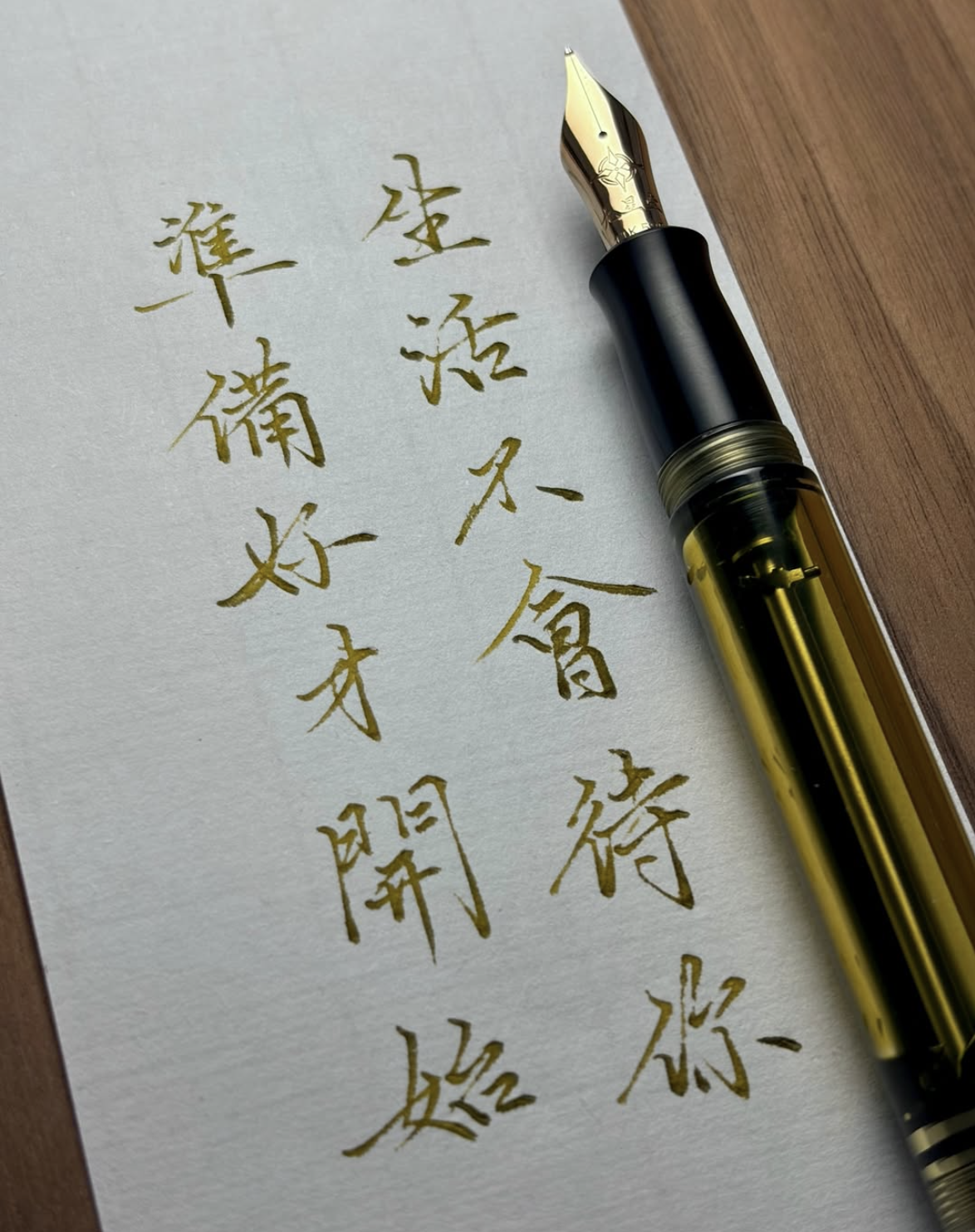
Kyuseido Akari with a Sankakusen grind
From @write_ocean
Recreating Brush Strokes With a Fountain Pen
The Sankakusen, named for the triangular shape of the grind, has its origins in historical nib grinds first developed to help East Asian writers recreate the versatility of a brush. Ironically, it was the observation that Montblanc, a brand of pens that were very popular in Japan during its economic boom of the ‘70s and ‘80s, ground their Extra Fine nibs into a very thin yet vertical shape and upward curve. This distinct shape was particularly well liked because that shape made it possible for writers to produce both thick and thin strokes based on their writing angle and wrist movement.
Nagahara Nobuyoshi, a nib master working at Sailor, a domestic Japanese fountain pen company, was inspired by such nibs from Montblanc and set forth to develop his own version, which became the Naginata-Togi. The Naginata-Togi was a longer, wider, and more rounded version of the Montblanc Extra Fine nib, and it set the Asian fountain pen community on fire.
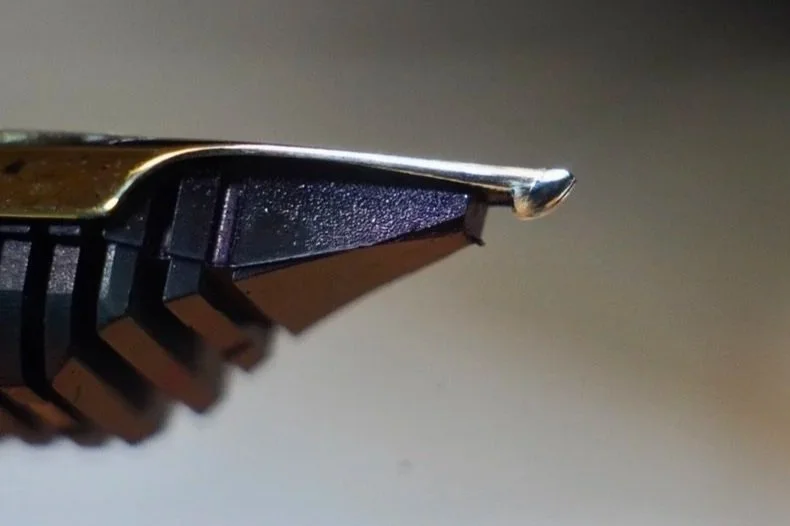
Side profile of our Sankakusen nib grind
The ability to shift from thicker lines to thinner strokes at will was used by East Asian writers and calligraphers to add a kind of flair to their writing that rounded nibs could not. At Kyuseido, we further refined this idea by adding a flat surface to the nib tipping, which creates the distinctive triangular contact point between the nib. The idea behind the triangular flat surface is based on the shape that a soft traditional writing brush makes when pressed on paper, thereby emphasizing the line variation that is possible when writing.
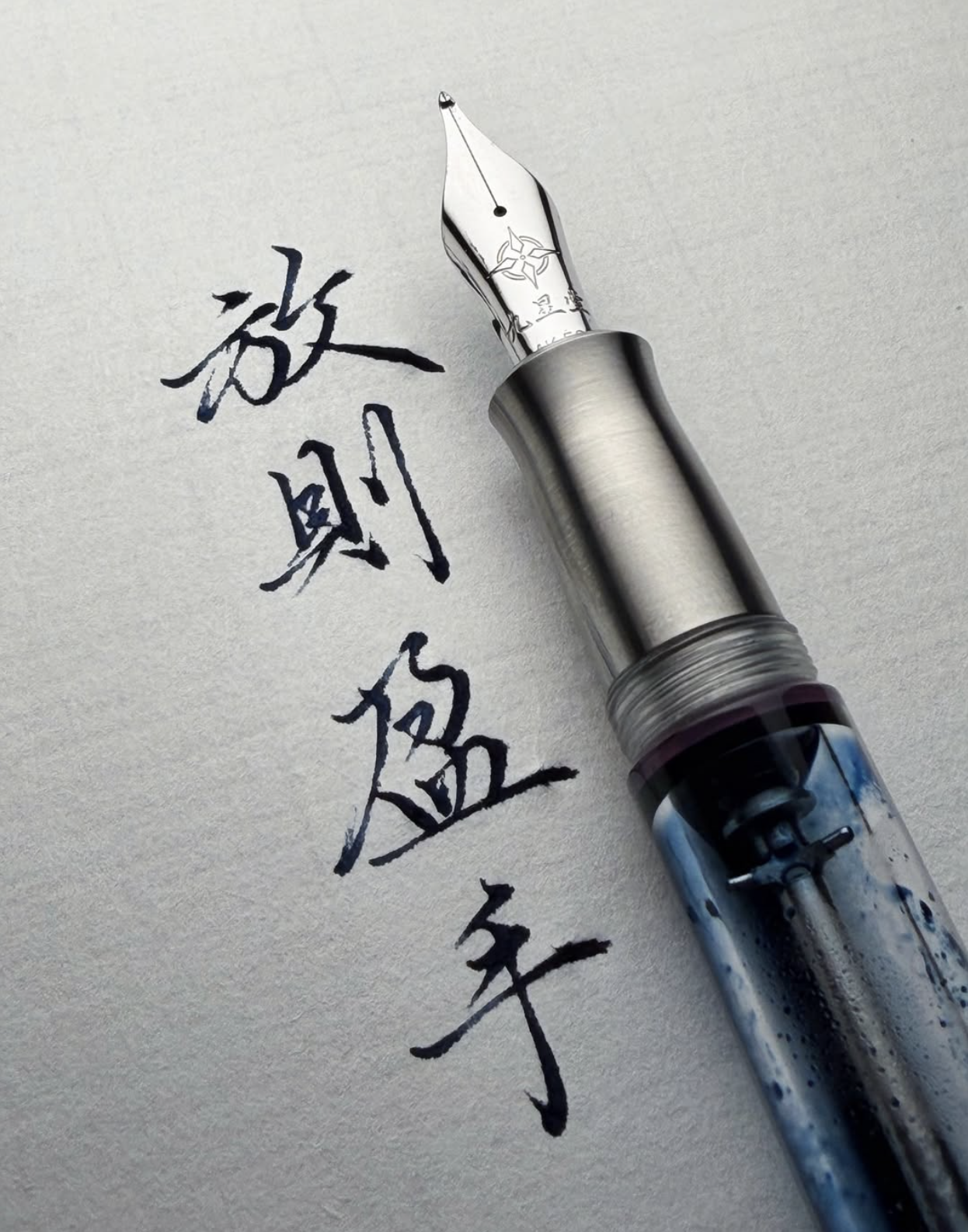
Kyuseido Kakari with a Sankakusen grind
From @write_ocean
The Eiji-Happo (永字八法) : Mastering the Fundamentals of Kanji
There are 8 basic brush strokes that are part of mastering the Standard Script, one of the five main calligraphy styles, which is seen in the character 「永」 Yong (Chinese) or Ei (Japanese). The practice of this is known as the Eiji-Happo (永字八法) or the “Eight Principles of Yong”, which is an essential part of one’s foundation to write beautiful characters. Each of these eight strokes represent the basic strokes that create most forms of characters that stem from Chinese writing.
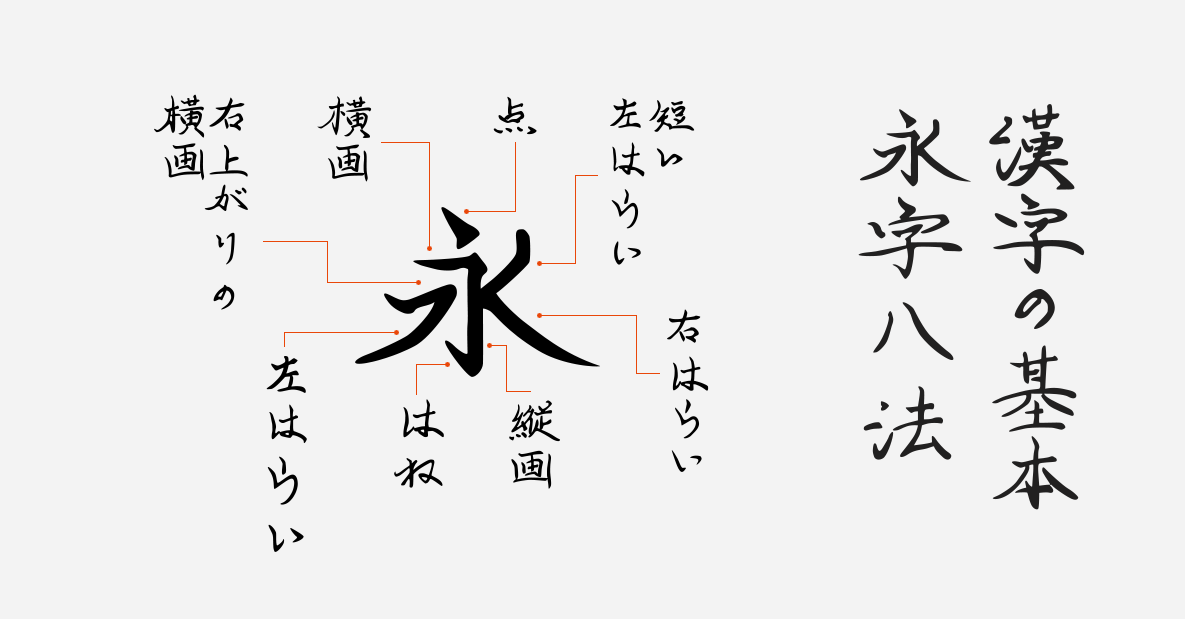
Eiji-Happo (永字八法) written with the Sankakusen grind.
As the Japanese writing system evolved, they continued the use of certain Chinese characters (Kanji, 漢字) but also introduced variations to these characters now known as Hiragana (ひらがな) and Katakana (カタカナ). While Kanji is associated with Japanese words through the meaning of the character, Hiragana and Katakana represent a phonetic system, much like the role of the alphabet in English. Although Hiragana and Katakana are uniquely Japanese, the basis of forming these characters has its roots in Kanji and brush writing.
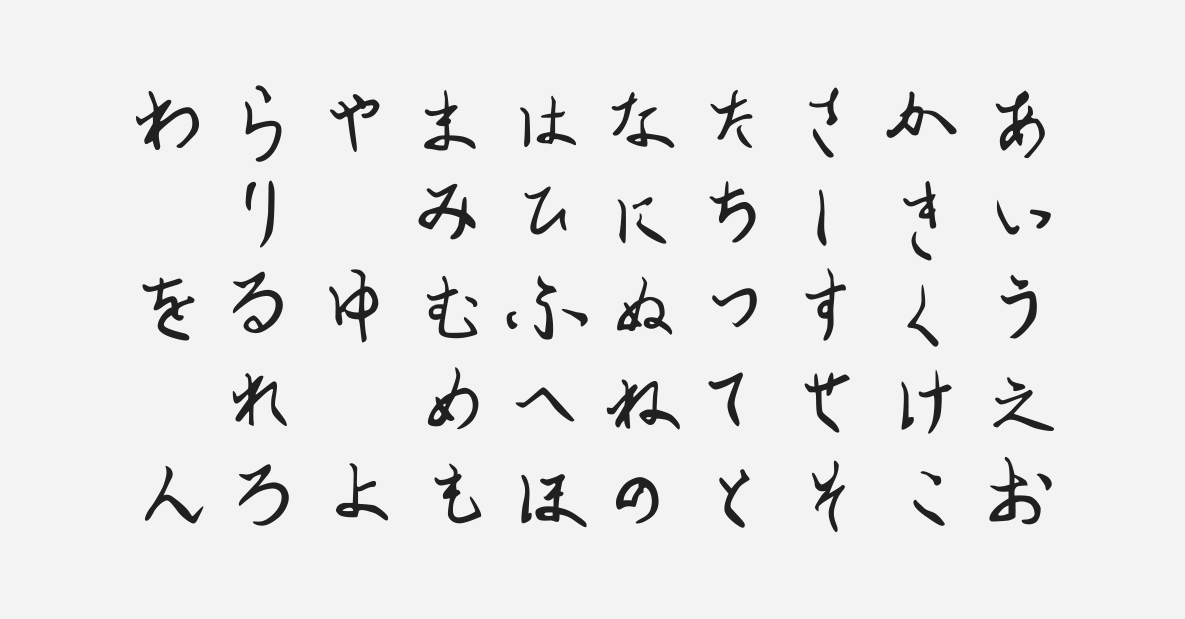
Hiragana (ひらがな) written using the Sankakusen grind
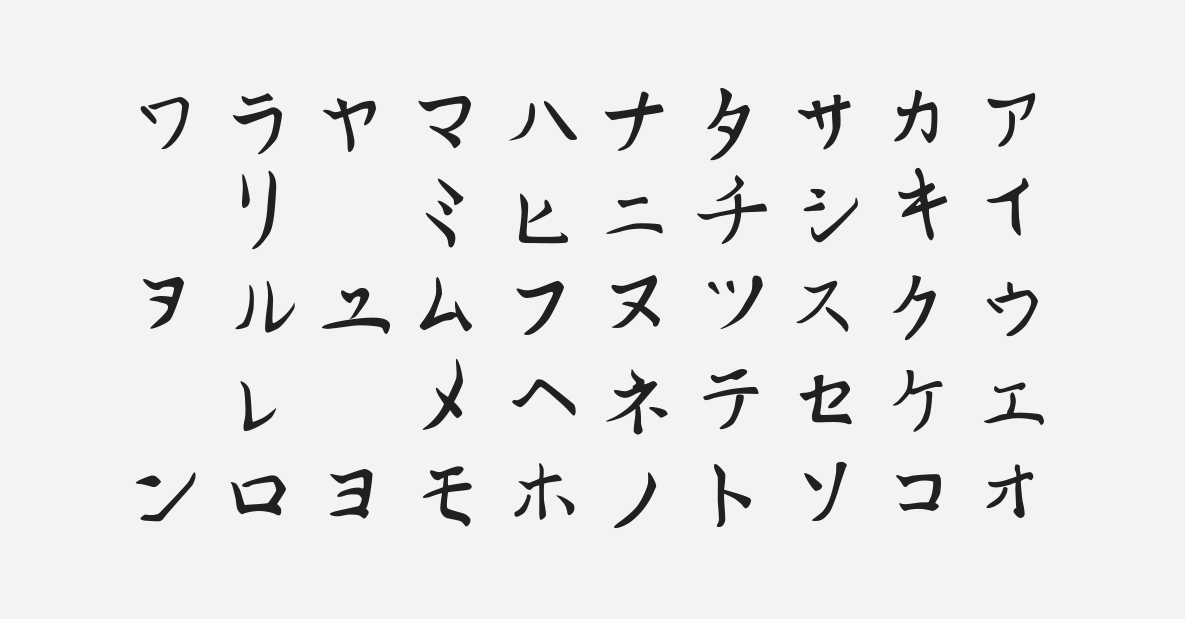
Katakana (カタカナ) written using the Sankakusen grind
The Sankakusen is designed to specifically recreate this brush-like line variation that is the essence of East Asian calligraphy that finds its central form in the Eiji-Happo. The triangular shape of the nib recreates the contact point of how a brush would interact with the paper when different levels of pressure are applied, easily creating the sharp points found at the ends of these strokes, which is also known in Japanese as the Harai (払い) (sweep stroke) or Hane (跳ね) (check stroke). The Sankakusen is therefore able to service the needs of both Japanese and Chinese calligraphic writing due to the shape of its tipping.
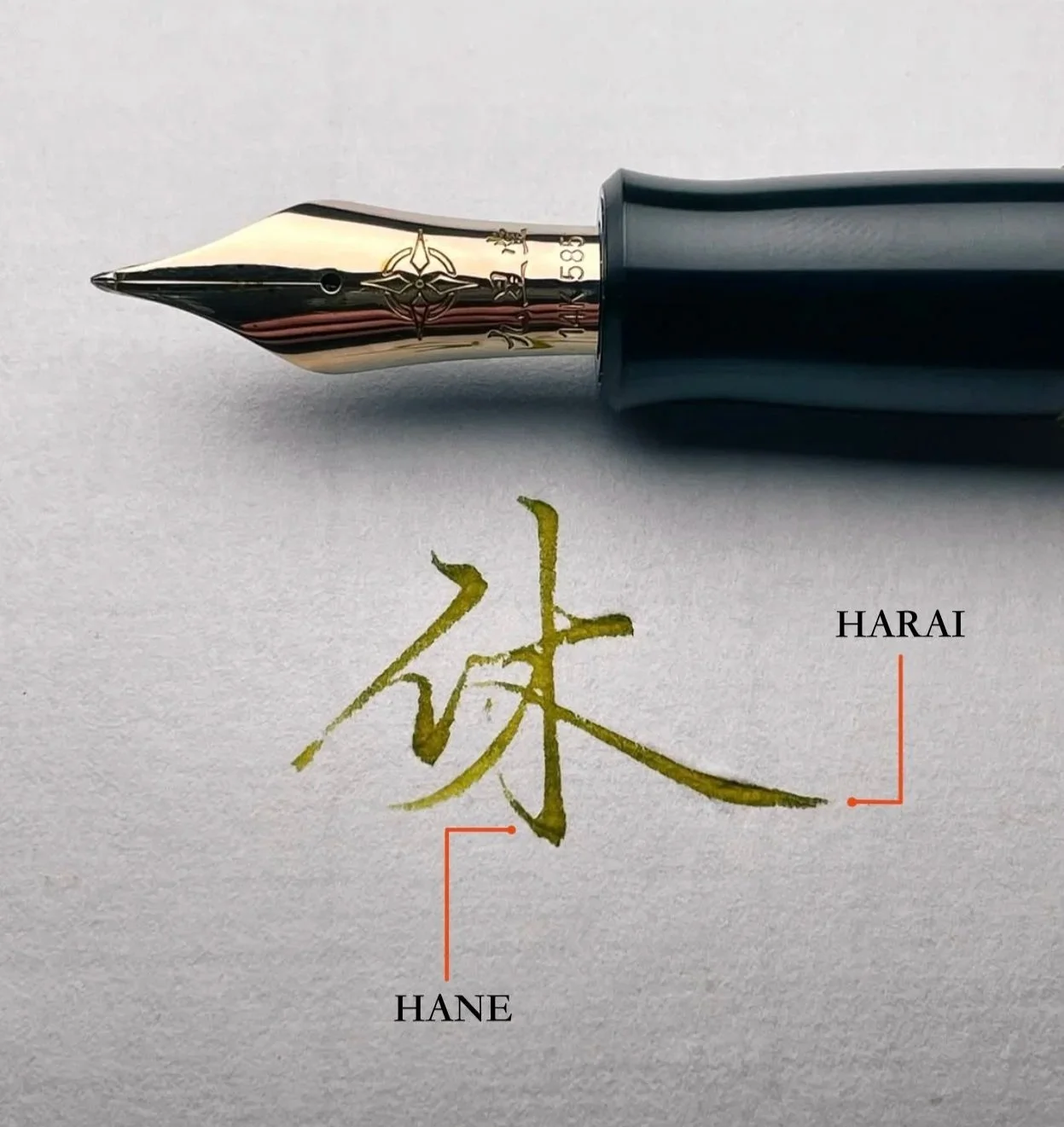
Kyuseido Akari with a Sankakusen nib grind.
From @write_ocean on Instagram
Enhance Your Everyday Writing
Being a variable width nib, the Sankakusen enables the writer to use a singular nib to create different writing widths. A newcomer to such nibs will find a subtle line variation in their strokes by simply writing due to the natural hand and wrist movements as the pen is moved across the page.
A more experienced writer with mastery over this nib can dictate the exact width of their horizontal and vertical strokes by controlling their pen angle and wrist movements. By controlling the angle at which the pen faces the paper and at which the nib contacts the surface of the page, our Sankakusen nib can be used to recreate a similar flair seen in brush pen lettering that is popular in modern Western calligraphy, or it can be used to simply enhance your natural style of handwriting.
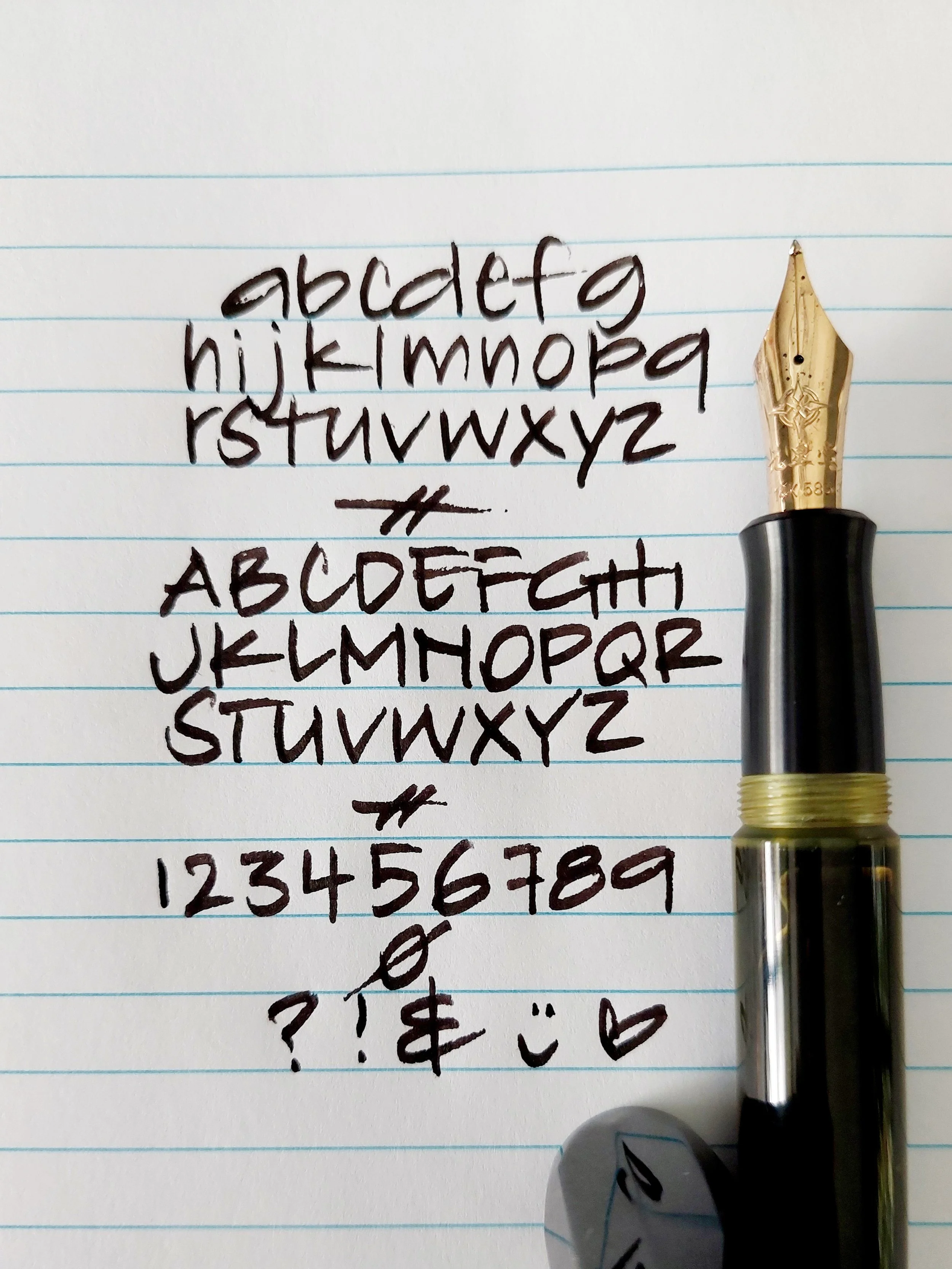
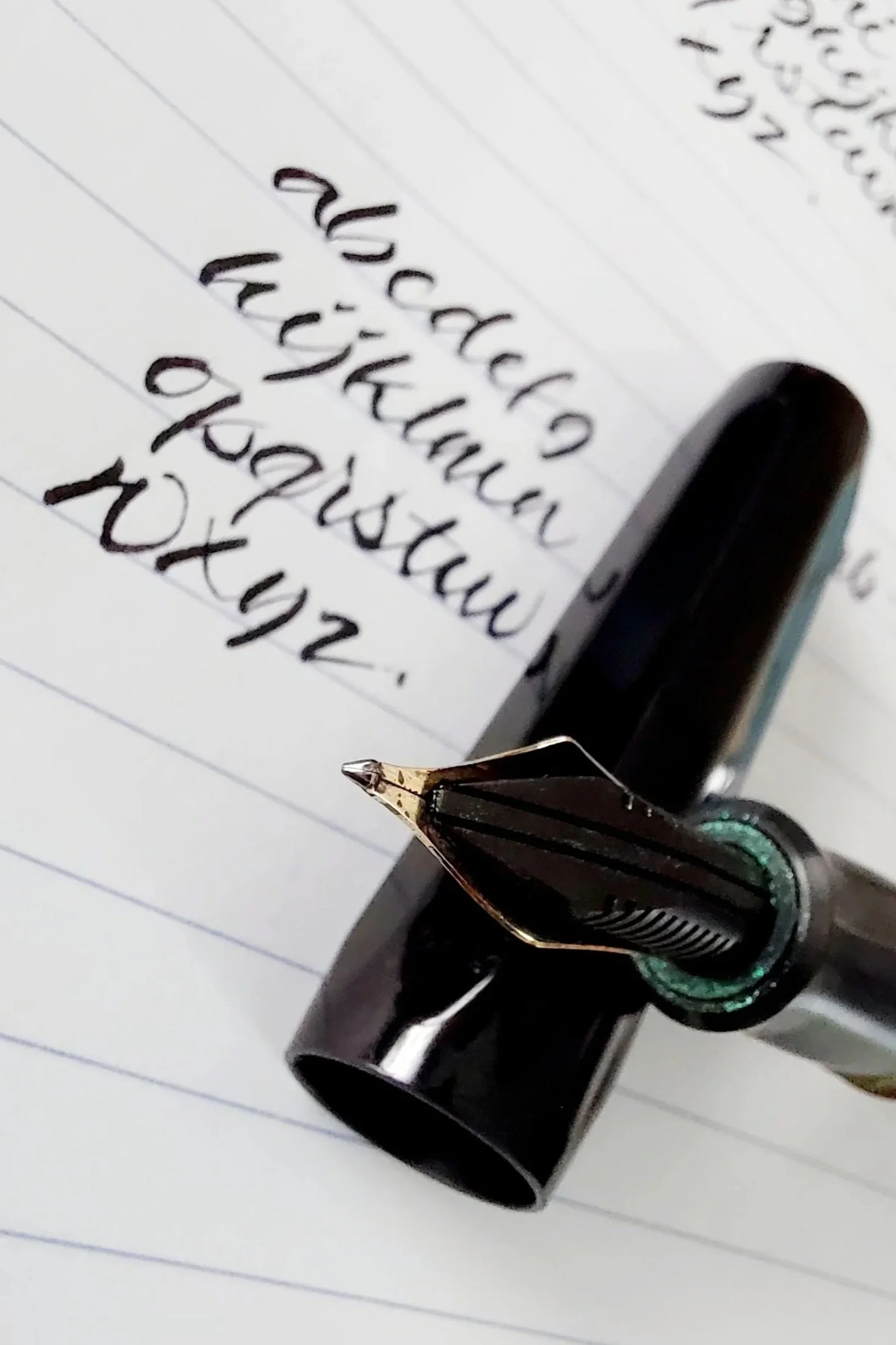
Latin characters with a Sankakusen grind
From @janinescribbles
Versatility for Art and Sketching
Beyond writing, the freedom to create both broad and narrow lines allows artists to explore their own style through creating expressive line work as well, breathing a sense of liveliness into quick sketches or artworks, which is especially suited for artworks such as comic art or urban sketching.
If you are interested in taking your writing to the next level, you are welcome to try our tester nib grinds at our events throughout the year, or purchase this nib grind directly on our website.
FIND THE SANKAKUSEN GRIND ON OUR PRODUCTS:
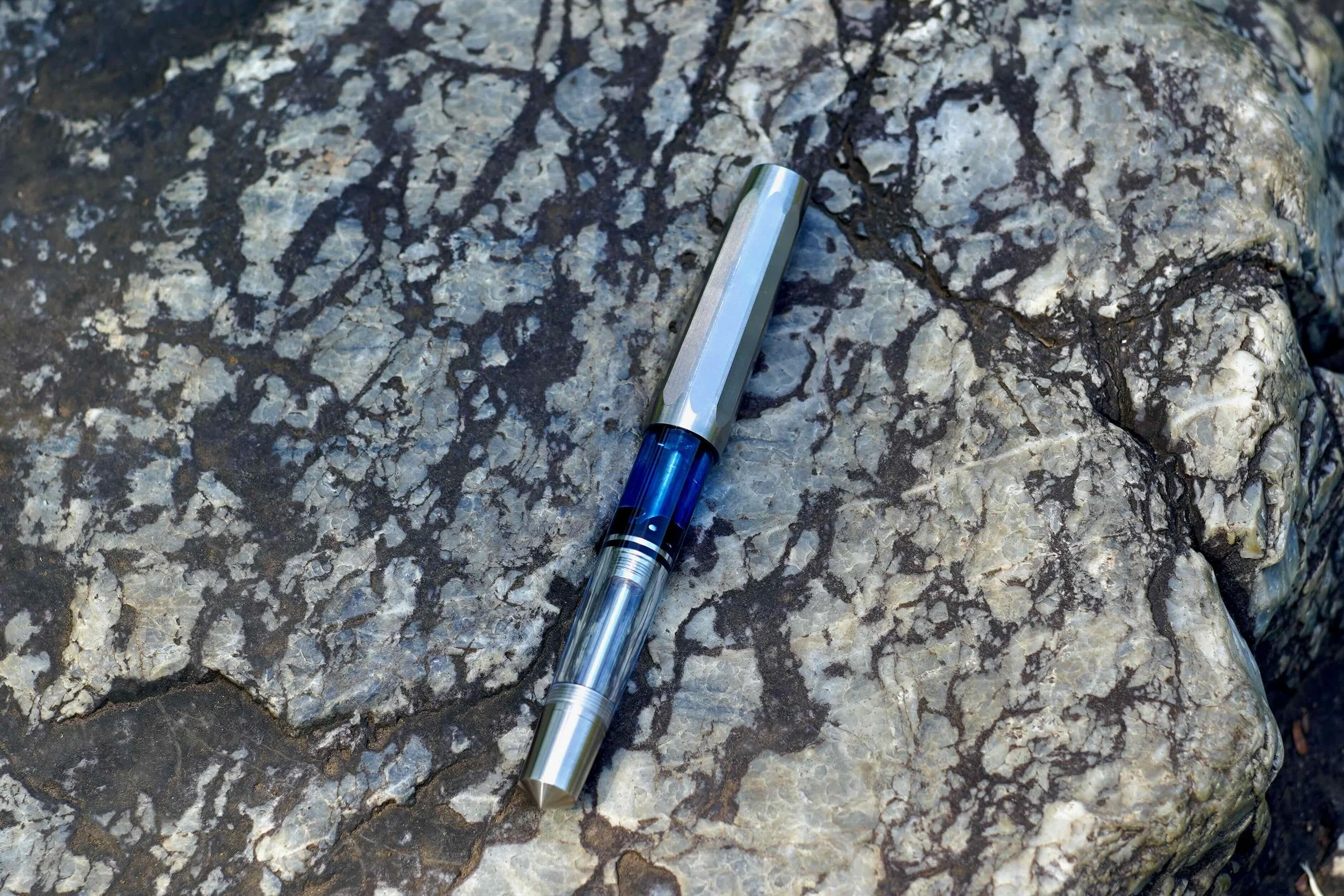
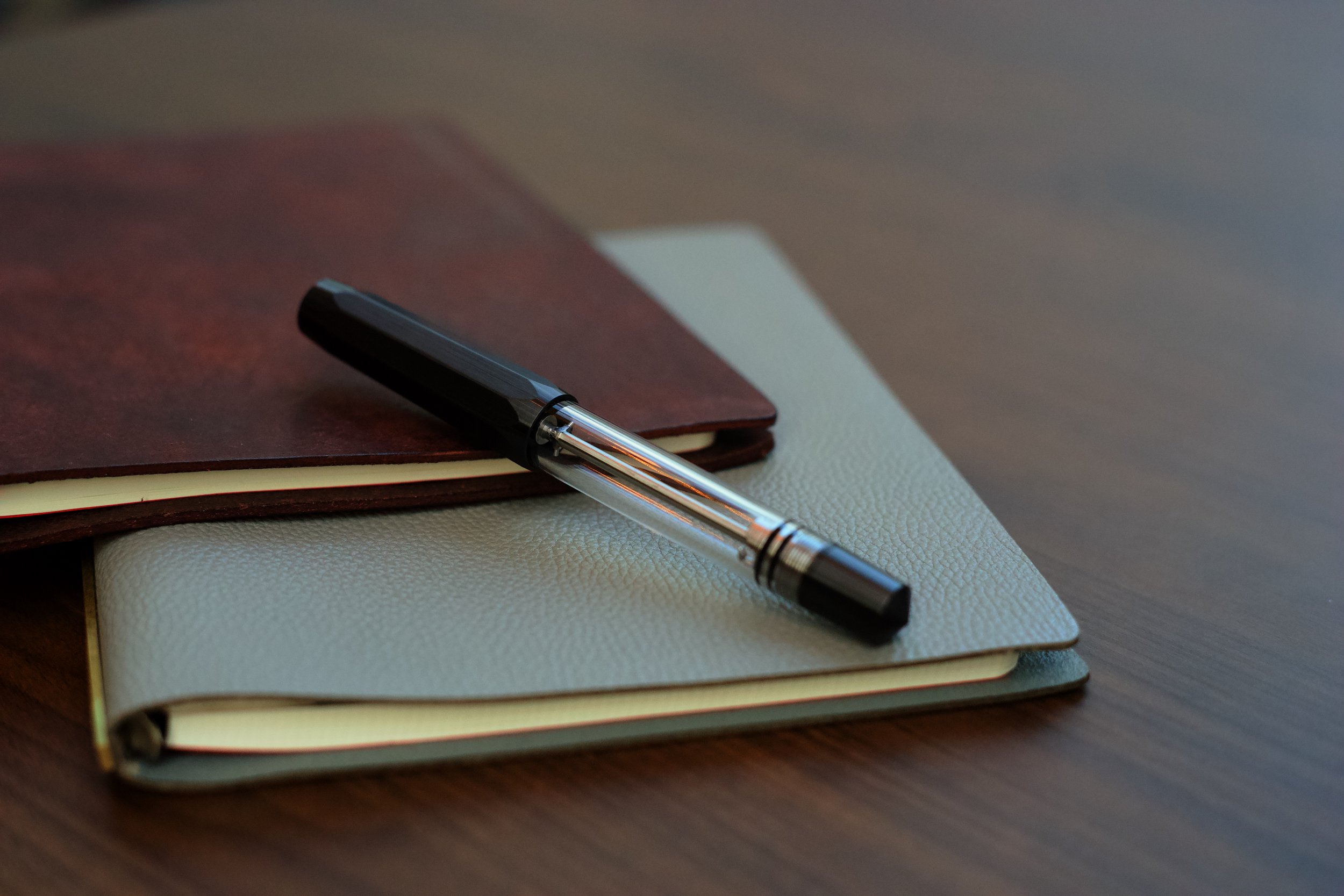
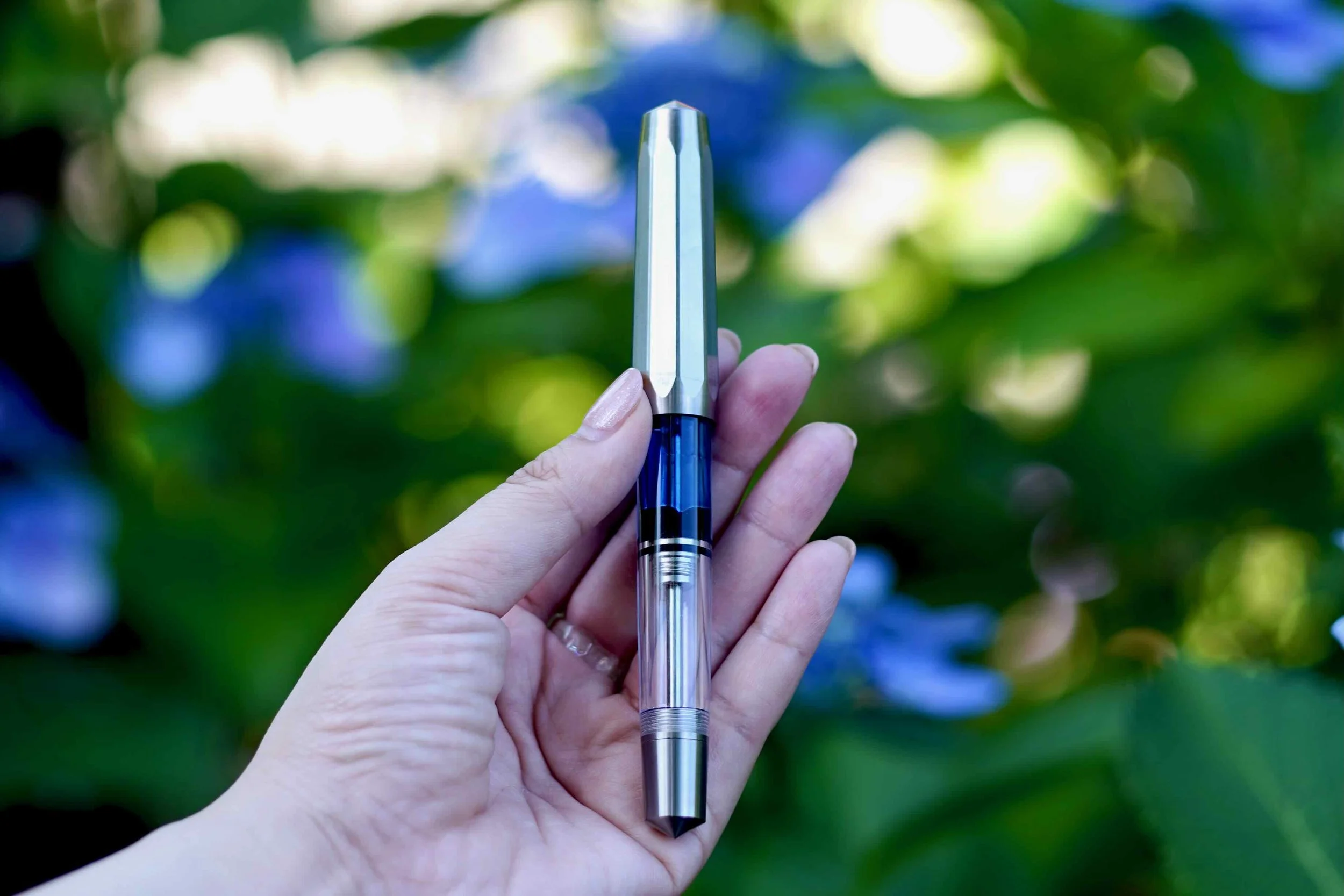
The Kyuseido Kosumi FS is the second fountain pen model from Kyuseido. “Kosumi” is the name of a move from the ancient game of Go, played as an extension of a previous move. The Kyuseido Kosumi FS features a 9 faceted cap design, introducing brutalist design to the elegant round barrel.
The titanium parts on this pen are finished with a machine brushed texture.


Mokume-gane is an artisanal Japanese metalworking technique taking several different metals and forging them into a single piece of material. The word Mokume-gane (木目金) translates to “Woodgrain/Woodeye” (Mokume - 木目) “Metal” (Gane - 金) and is characterized by its distinct woodgrain pattern formed by the layering of different metals.
As this is an artisan material, no two pens are identical and will have their own unique expressions and imperfections but all of these pens will evolve with the user to become pieces of art in their own right.
The Mokume-gane is also available in the Kyuseido Kosumi FS model.
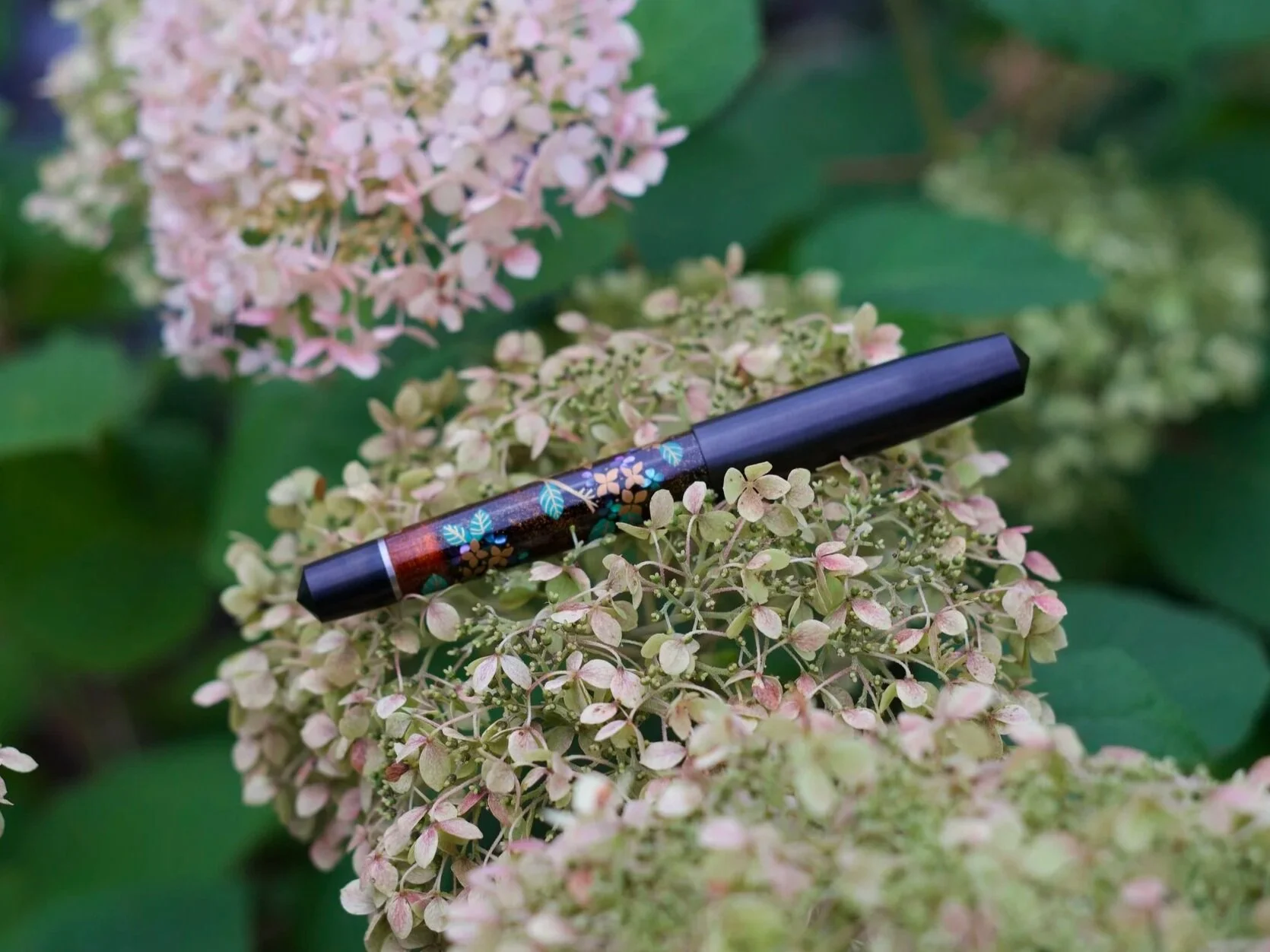
The Kyuseido Kakari Natsu-Ajisai Summer Hydrangea is the second in our series of four limited edition collections inspired by the four seasons. This series was made in collaboration with Sophia from Urushi Notes to create this limited edition of 9 pens that will make its debut at the California Pen Show in February 2026.
Starting in June, the transition of Spring to Summer in Japan is marked by the arrival of the rainy season also known as Tsuyu (梅雨). During this time, the country is marked with vibrant blooms of blue, purple, and pink hydrangeas which transform the neighbourhoods into picturesque scenes. It has become the symbolic flower of this change in season, signalling the arrival of the warmer months.
In the past, hydrangea were also known as Nanahenge (七変化), or “seven transformations”, as a reference to their ever changing appearance as a result of the changes in pigments to different environmental factors. Over time, hydrangeas have come to represent sincerity, heartfelt emotions, gratitude, and apology.
Each pen is numbered from 1 to 9 with the artist’s signature. Please note that these images shown here are representative photos of the pen, and there will be slight variations in colors and patterns between the different numbered editions.
This pen is listed only with the Sankakusen grind, but if you prefer another nib, please contact us through the inquiry form BEFORE PURCHASE and we will gladly do our best to accommodate your preferences.
Additional Resources:
About the Sailor Naginata Togi:
https://sailor.co.jp/product/10-7121/
https://sailor.co.jp/topics/interview_naginatatogi/
Additional Information About the Sankakusen grind:
https://www.kyuseidotokyo.com/sankakusen
How to Write Eiji-happō with a Brush:
